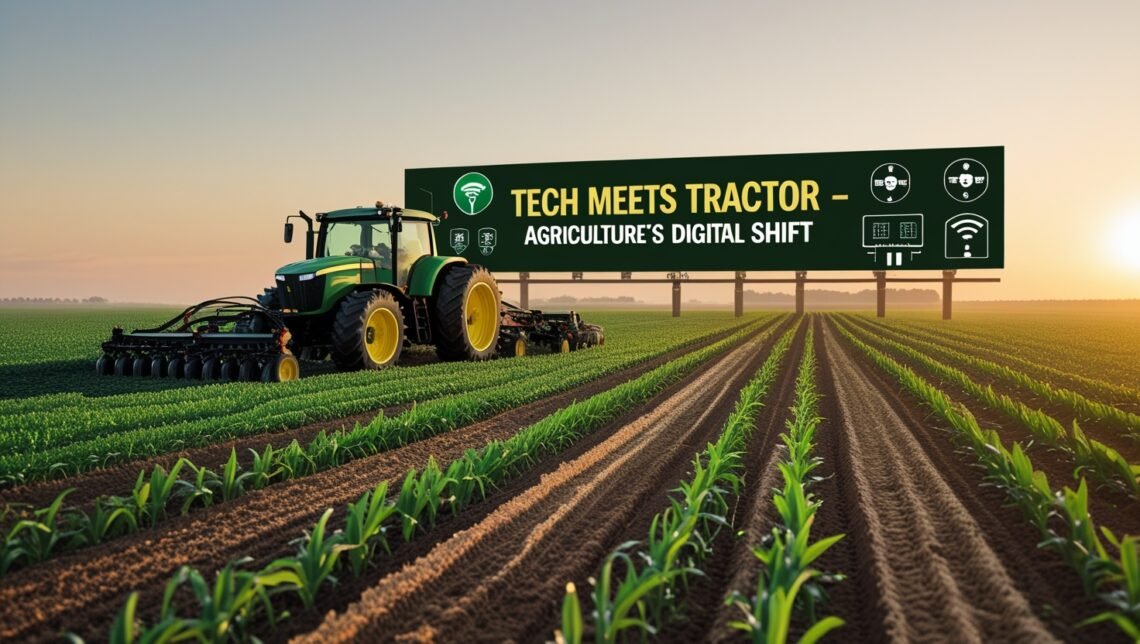
Imagine a tractor that not only plows your field but also predicts tomorrow’s weather, optimizes seed depth, and orders fertilizer, all on its own. Welcome to the era where smart farming meets big data, and every furrow is guided by algorithms. As agtech surges forward, tractors have transformed from muscle-powered machines into mobile command centers. In this exploration of digital agriculture, we’ll uncover six trailblazing innovations from autonomous tillage to cloud-linked crop tracking, and show how the humble tractor is leading a full-scale revolution on the farm.
From Steel Beasts to Data Hubs:
Modern tractors bristle with sensors, GPS modules, soil-moisture probes, and engine-health gauges, sending hourly updates to farm dashboards. This IoT in agriculture lets farmers monitor fuel consumption, engine temperature, and even operator behavior in real time.
If a tire pressure dips or the engine runs hot, the system pings maintenance crews before breakdowns occur, slashing downtime. Meanwhile, embedded AI analyses field topography to auto-steer tractors along the most efficient paths, eradicating overlap and reducing fuel use by up to 20%. Today’s tractors are no longer just pull-and-push workhorses; they’re precision agriculture platforms gathering data one acre at a time.
Cloud-Controlled Crop Cycles:
Gone are paper logs and guesswork. From the moment the seed hits the soil until the crop reaches market, every action is timestamped and uploaded to the cloud. Tractor-mounted planters adjust seeding rates on the fly, denser where moisture is ample, lighter in drier patches, based on AI-driven soil maps. Post-harvest, yield monitors relay bin weights instantly, enabling real-time sales decisions.
This farm automation pipeline empowers cooperatives and distributors to track produce origins, forecast supply, and even comply with traceability regulations, all through unified dashboards accessed anywhere on a smartphone.
Algorithmic Irrigation: Watering with Precision:
Traditional irrigation soaks entire fields; today’s systems use tractor-guided nozzles and satellite imagery to deliver water drop by drop. AI algorithms analyze soil sensors and weather forecasts to calculate exact volumes needed per zone. Tractors tow smart irrigation rigs that open valves only over thirsty patches, conserving up to 40% of water.
When drought hits, the system prioritizes high-value crops first. Integrated with digital agriculture platforms, these rigs schedule nightly runs when evaporation is lowest, maximizing yield per liter and making every drop accountable.
Livestock 2.0: Digital Herds and Wearable Tags:
Pulling beyond crop fields, tractors now seed grazing pastures with mineral supplements guided by livestock data. Wearable ear tags equipped with RFID and motion sensors track each animal’s feeding habits, grazing patterns, and health metrics. The tractor-mounted feeder syncs with herd analytics, dispensing tailored rations to underweight or vulnerable animals.
Farmers receive alerts on slow gains or elevated temperatures, early warnings of illness. This blend of IoT in agriculture and smart farming shrinks veterinary bills and boosts herd productivity, turning every tractor run into a precision livestock management round.
Drone-Over-Field Intelligence: Eyes in the Sky:
Today’s tractors often operate in tandem with drones. Before the first furrow, unmanned aerial vehicles sweep fields, capturing multispectral imagery that reveals nutrient deficiencies, pest outbreaks, or irrigation gaps invisible to the naked eye. AI engines process these images within minutes, generating geo-tagged action maps.
Tractors equipped with prescription-spray booms follow these maps to apply input only where needed: more fertilizer over nitrogen-hungry zones or spot-treatment for early blight. The result is minimized chemical use, reduced runoff, and healthier soils, an emblem of precision agriculture at scale.
Farm-to-Fork Traceability: Blockchain on the Barnyard:
Consumers crave transparency, and tractors are answering that call. Every seeding, spraying, and harvesting event logged on field tractors can be stamped into a blockchain ledger, an immutable record from plowshare to plate.
Retailers and regulators can scan a QR code on packaging to view the exact GPS coordinates of harvest, pesticide regimes, and storage conditions. This level of traceability not only commands premium prices but also speeds recalls in the rare event of contamination. Tractors thus become the first link in a fully digitalized supply chain, delivering confidence with every acre tilled.
Conclusion:
The union of tractors and technology has sparked a digital shift in agriculture, turning age-old tasks into data-driven, hyper-efficient operations. From autonomous guidance to blockchain-backed traceability, agtech innovations ensure higher yields, lower inputs, and greener footprints. As these machines continue to evolve, learning field nuances, adapting to climate quirks, and integrating with drones and sensors, they’re redefining what it means to farm. The next time you see a tractor in a field, remember: it’s not just tilling soil, it’s cultivating the future of food.
FAQs:
1. What is digital agriculture?
The use of data, connectivity, and automation to optimize farming practices.
2. How do smart tractors save costs?
By auto-steering, predictive maintenance, and variable input application.
3. Can drones work with tractors?
Yes—drones map and diagnose fields, guiding tractors for spot treatments.
4. Is blockchain really needed on farms?
It secures supply-chain records, boosting transparency and recall speed.
5. Do these technologies suit small farms?
Many modular tools scale down affordably for smallholders.
6. Will tractors be fully autonomous soon?
Fully driverless models are in trials and could be mainstream within five years.

