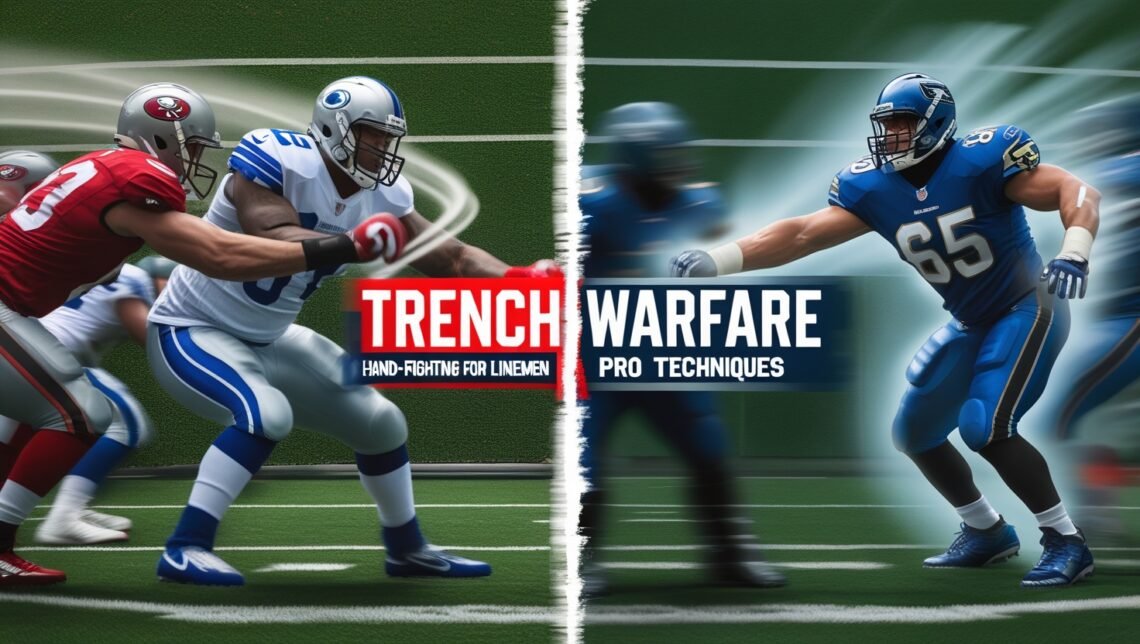
In a game defined by split-second decisions, one powerful move can shift the balance on the field. Mastering hand-fighting in the trenches transforms linemen into unstoppable forces. This guide reveals unique, pro-level techniques that blend physical strength, crisp precision, and adaptive tactics to elevate your performance like never before.
Mastering the Trenches:
In the heart of every football game, the trenches are where strategy meets raw power. For linemen, trench warfare isn’t just a series of clashes, it’s a dynamic contest of skill, timing, and willpower. The art of hand-fighting begins with understanding that every touch and grip can dictate the flow of play. In these close-quarters battles, a lineman must deploy not just brute force but also sharp, calculated movements. By knowing when to engage and when to yield, linemen control the pace of the game.
Unlike other positions, every encounter along the line is an opportunity to outsmart and overpower the opponent. Developing shock-absorbing agility and a refined sense of contact is essential as you learn to pivot, redirect, and dominate with each snap. This section sets the stage, inviting you to view the line of scrimmage as a true battlefield, where knowledge of every motion and countermove marks the difference between victory and defeat. With a deep focus on understanding the intricacies of hand placement, leverage, and timing, you can unlock the secrets to seamless, effective trench warfare.
Elevating Physical Strength:
The core of every elite lineman’s performance starts with robust physical strength. A strong base is paramount to mastering hand-fighting in the trenches. Begin with compound movements and targeted resistance exercises that build both core and limb strength. Incorporating techniques like isometric holds, weighted pushes, and dynamic resistance routines can significantly enhance your effectiveness on the line. For instance, routine exercises with resistance bands or partner push drills not only train your muscles but also help simulate real-game scenarios where every second counts.
The goal is to develop functional strength that transforms raw muscle into precise, impactful force. By emphasizing proper form, stability, and explosive potential, you build a foundation that supports every advanced maneuver. Over time, this disciplined approach ensures that your physical prowess is complemented by agility, empowering you to fend off opponents and seize the moment with every play. Remember, strength is not measured only by the ability to push back fiercely but also by the subtle control of your body under pressure, all essential elements of pro techniques in the trenches.
The Art of Hand Placement and Control:
While raw power is important, the finesse of hand control defines the true art of hand-fighting. Every engagement along the line requires exact hand placement, where a slight misstep can be the difference between a successful block and an exploitable error by the opposition. Focused drills involving rapid finger grips, controlled wrist rotations, and precisely timed hand strikes build the tactile skills necessary for competitive play. Think of your hands as both fend tools and conduits of energy: they not only block but also create openings by redirecting force.
This refined skill ensures that your grip remains dynamic, able to shift at a moment’s notice while maintaining perfect control over your opponent’s momentum. Training with dedicated grip strength tools and competitive hand drills can develop a nuanced sensitivity needed for split-second decisions. By marrying precision with power, linemen gain the ability to dictate every encounter on the line. Every micro-adjustment of your grip reinforces your expertise during high-pressure moments. This fine-tuned control is what transforms a good lineman into a formidable force during trench warfare.
Unleashing Explosive Strength:
When every twitch counts, the secret to dominance lies in your capacity to act explosively. Explosive strength is not just about raw muscle; it’s about the ability to harness that power in rapid, controlled bursts. Specific drills such as plyometric jumps, medicine ball throws, and short-interval sprints activate fast-twitch muscle fibers, making your movements both swift and sudden. By pushing your limits through these high-intensity exercises, you develop a responsiveness that catches opponents off guard.
This burst of energy is essential to burst through blocks or quickly reset into a defensive posture. The focus here is not only on speed but the perfect timing of that speed to match the evolving dynamics of the play. Incorporating explosive drills into your routine conditions your body to react faster, thereby enhancing your overall trench warfare strategy during critical moments of the game. With enhanced burst power, your transitions become smoother, and even in tight spots, you have the ability to decisively overcome resistance with a flash of sheer energy.
Reading the Opponent in Real Time:
Beyond physical strength and precise hand placement, true excellence in hand-fighting comes from keen situational awareness. Adaptive instincts are developed by training your mind as much as your body. The ability to scan movement patterns, predict opponents’ reactions, and adjust your tactics on the fly is what sets a good lineman apart from a great one. Film study sessions, coupled with live-action drills, can sharpen your eye for spotting even the subtlest cues. Whether it’s a slight shift in balance or a momentary lapse in focus, your ability to read your opponent’s movements ensures that you’re always one step ahead.
This mental agility empowers you to quickly decide whether to engage fully or to hold back momentarily to counteract the opponent’s strategy. In a realm where milliseconds have monumental importance, refining your adaptive instincts ensures that you not only anticipate but also dictate the flow of the clash. By blending physical tactics with mental sharpness, your approach to trench warfare becomes both proactive and reactive, making you a dynamic force on the field.
Mastery Through Repetition:
Excellence in hand-fighting is not achieved overnight but through relentless repetition and a commitment to growth. Focused drills, practiced regularly, become the cornerstone of refined technique. These sessions include simulated line engagements, partner resistance workouts, and real-time scenario practices that help internalize every move until it becomes second nature. Equally essential are recovery strategies such as stretching, active rest, and hydration are instrumental in ensuring that your body adapts and grows stronger after each training session.
Incorporating recovery routines prevents burnout and minimizes the risk of injury, allowing you to continuously push your limits. Balancing intense training with proper recovery is the key to sustained success on the line. As you cycle through phases of intense practice and deliberate rest, you will notice gradual improvements in your consistency, strength, and mental clarity. This continuous loop of improvement and adaptation is the hallmark of pro techniques in the trenches. In a sport where the stakes are high, the dedication to mastering every detail, no matter how minute, yields results that go beyond individual plays, solidifying your legacy as an unyielding performer in trench warfare.
Conclusion:
In the fast-paced world of football, mastering trench warfare hand-fighting means combining superior strength, precision, explosive power, mental acuity, and disciplined practice. These pro techniques empower linemen to not only face but dominate every confrontation on the line.
FAQs:
1. What is trench warfare hand-fighting?
It’s the art of using precise hand movements and controlled strength to gain an advantage on the line.
2. Why is hand fighting vital for linemen?
It enables control over opponents during every snap, ensuring dominance at the line of scrimmage.
3. What drills improve hand-fighting skills?
Exercises like resistance bands, finger grip trainers, and partner push drills are highly effective.
4. How do you develop explosive strength?
Incorporate plyometrics, sprints, and weighted movements to burst into action during plays.
5. Why is adaptive instinct important?
Reading the opponent’s cues allows you to react quickly and strategically in dynamic situations.
6. How does recovery enhance performance?
Proper stretching, hydration, and rest ensure muscle repair, allowing you to continuously train at peak levels.

